

Future of work will change in post COVID-19 world
The way we worked may never be the same again. The future of work will change post COVID -19 as the pandemic has changed every aspect of our life; be it professional life or personal. The way we travel, working environment and interaction with colleagues an office staff.
For the last couple of months, most of us have worked from home, done countless video calls, juggled work and family duties, and have tried to maintain calm in the face of uncertainty.
With many questions unanswered. How will jobs change in the future? While some changes may be temporary until there is a vaccine for this, other changes may become permanent.
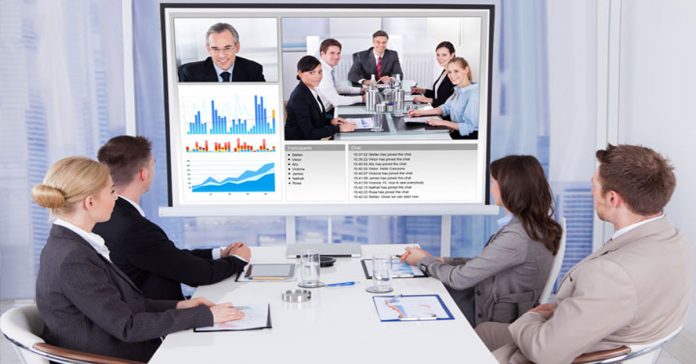
Meetings in offices would be replaced by virtual meetings
With the lockdown extension due to the ongoing coronavirus pandemic, companies are not planning their staff to get back to the office as the work from home model seems to be delivering positive results.
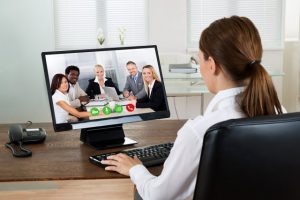 Today, there are workplace collaboration and communication platforms that offer an all-in-one suite with access to email, calendar, to-do’s, voice notes, video conferencing and more. Video conferencing has emerged as a powerful tool to drive team collaboration at several leading brands worldwide.
Working from home forever
Twitter was the first company to move to telework in March as a result of the world health crisis and it recently announced that it will continue that policy indefinitely as part of a move towards a “distributed workforce.”

The past few months have proven a lot of the businesses who were earlier unsure about remote working that works from home is do-able. So if employees are in a role and situation that enables them to work from home and they want to continue to do so forever, organizations will make it happen.
Result based tracking
Managers would focus on the final results, such as deliverables and reports. This will let employees to prove their productivity, with or without local supervision. The “new normal” isn’t necessarily a business world without working in an office, it’s just a world where we focus on work rather than office space.
 As offices and teams adopt new ways of working via virtual workplaces, asynchronous communication, and results-based tracking, we’ll be able to focus much less on where we’re working, and instead on the immense contributions that we’re making to our companies and industries.
Work Contribution by men and women alike.
Businesses are now being forced to operate remotely and long-term flexibility could be here to stay, which allows both men and women to balance both work-life and household tasks simultaneously.

This new workplace structure generates more equity at home as both men and women are able to spend quality time with their families and contribute to household duties equally. This development will also enable us to create a more gender balanced workplace in the near future.
9-to-5: A thing of the past?
I have heard many people say that they are not interested in working in a 9-5 job. Good news is that 9 to 5 is a past thing. Now the challenge for these people is to manage work and home and fulfilling all the demands satisfactorily.

With relaxed rules regarding the timings, the expectations would certainly be high as well as have respect and trust on their employees. Even though they never wanted to work 9-5, now they have to create a balance between work time and persona/family time.
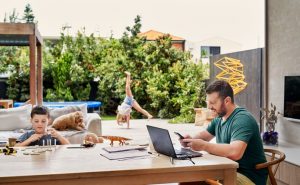
They have to create a environment between the employers, managers and themselves, though online yet should not feel pressurized to respond to the emails and messages at anytime of the day.
ALSO READ: Life after Coronavirus, will you be able to see the challenges ahead?