

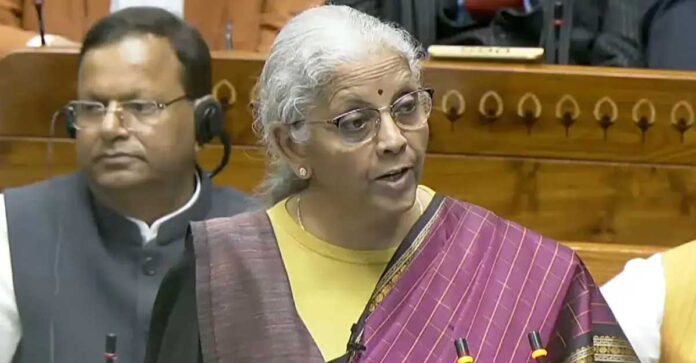
The Union Budget 2026‑27 arrives with one big promise: growth that actually touches ordinary lives. Framed around “Yuva Shakti”, the Finance Minister Nirmala Seetharaman’s speech puts young Indians at the centre of the country’s economic story.
On the growth front, the government continues its infrastructure push with around ₹12.2 lakh crore of capital spending on highways, railways, logistics hubs and new “City Economic Regions” that link clusters of towns into single job markets. For people in Tier‑II and Tier‑III cities, this could mean better connectivity and more jobs closer to home, instead of being forced to migrate to metros.
Industry and MSMEs get a strong signal too. Plans to revive about 200 industrial clusters, expand risk capital through schemes like the Self‑Reliant India Fund, and build plug‑and‑play industrial parks aim to push small firms into the big league.
For the middle class, the Indian budget brings stability rather than shock: no change in income‑tax slabs, but some relief through lower TCS on foreign travel, overseas education and medical expenses.
Importantly, the budget also talks about mental health—with plans for a “NIMHANS‑2” and stronger national institutes—and green growth, backing carbon capture and climate‑friendly technologies.
In short, Union Budget 2026‑27 bets on youth, infrastructure, MSMEs and cleaner growth, while keeping tax rules steady for the common man and slowly tightening fiscal discipline.